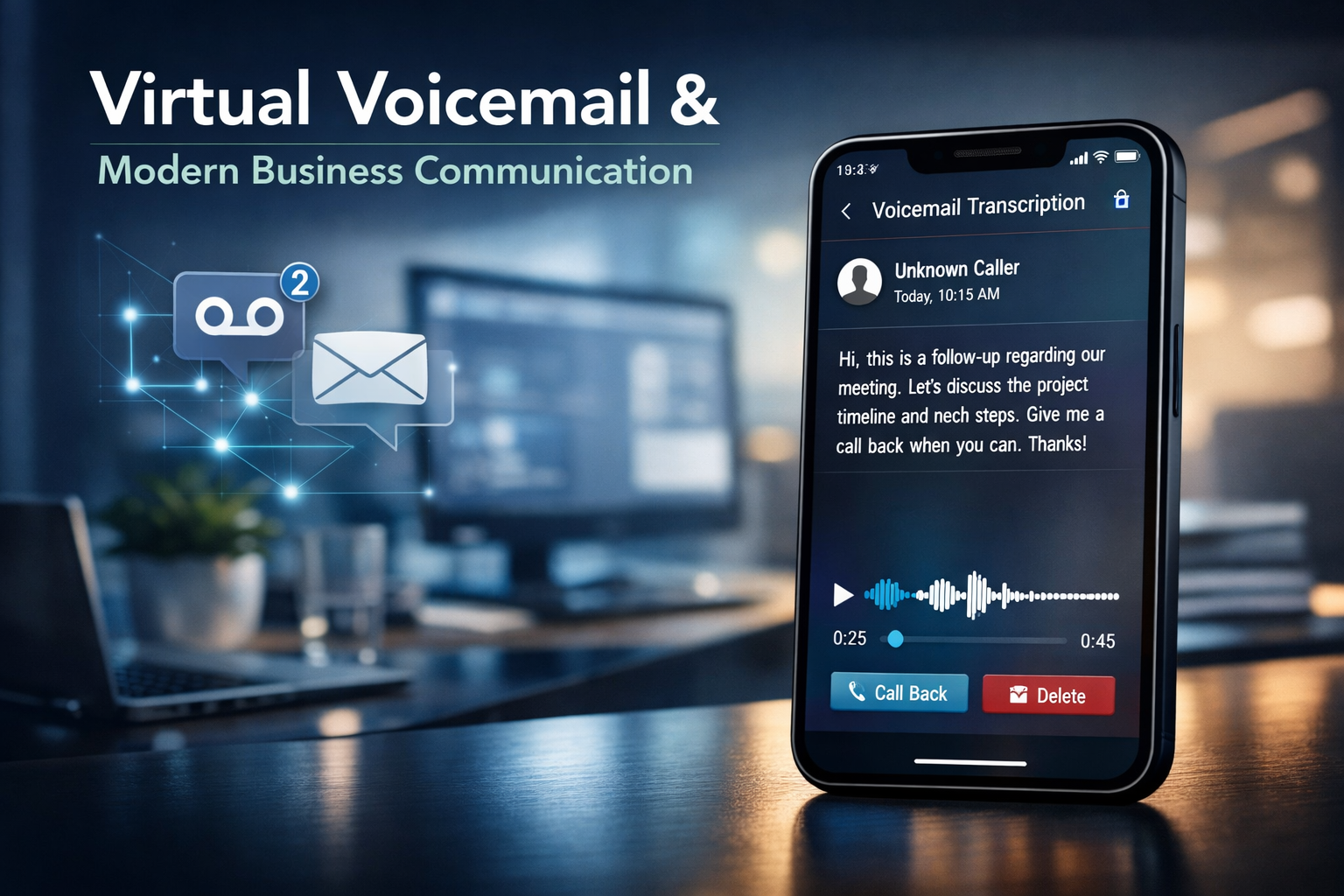
Introduction: The Evolution of Voicemail in the Digital Age
In an era defined by rapid technological advancement and an increasingly mobile workforce, effective communication stands as the bedrock of business success. For decades, voicemail served as a crucial tool for capturing missed calls, ensuring that no message went unheard. However, the traditional voicemail system, tethered to physical phone lines and offering limited functionality, has struggled to keep pace with the demands of modern enterprises. The advent of Voice over Internet Protocol (VoIP) technology has revolutionized telecommunications, paving the way for a more dynamic and efficient solution: virtual voicemail.
Virtual voicemail transcends the limitations of its predecessors by leveraging cloud infrastructure to deliver a flexible, accessible, and feature-rich messaging experience. It's no longer just about recording a message; it's about transforming voice into actionable data, integrating seamlessly with other business tools, and empowering professionals to manage communications from anywhere in the world. This comprehensive guide delves into the intricacies of virtual voicemail, exploring its core functionalities, myriad benefits, operational mechanics, and its pivotal role in shaping the future of business communication.
What is Virtual Voicemail?
At its core, virtual voicemail is a cloud-based service that digitizes and centralizes voicemail management. Unlike traditional systems that store messages on a local server or directly on a phone, virtual voicemails reside in the cloud, making them accessible via the internet. This fundamental shift in architecture unlocks unparalleled flexibility and a suite of advanced features that are indispensable for today's businesses.
When a call is missed, the virtual voicemail system intercepts it, records the message, and then processes it for delivery. This process often involves converting the audio into various formats, such as email attachments, text transcriptions, or accessible files within a dedicated online portal or mobile application. The underlying technology, VoIP, facilitates this transformation by converting analog voice signals into digital data packets that can be transmitted over an internet connection.
Key Differentiators from Traditional Voicemail:
| Feature | Traditional Voicemail | Virtual Voicemail |
|---|---|---|
| Storage | Local, on-device | Cloud-based |
| Access | Dial-in from phone | Internet-enabled (email, app, web portal) |
| Format | Audio only | Audio, text transcription, visual |
| Flexibility | Limited, location-dependent | High, accessible anywhere, anytime |
| Features | Basic recording, playback | Advanced (transcription, email, integration) |
| Cost | Hardware, maintenance, per-minute | Subscription-based, often lower TCO |
The Transformative Benefits of Virtual Voicemail
The adoption of virtual voicemail offers a compelling array of advantages that directly impact productivity, efficiency, and customer satisfaction. These benefits extend across various aspects of business operations, making it a strategic investment for organizations of all sizes.
1. Enhanced Accessibility and Mobility
One of the most significant benefits of virtual voicemail is the ability to access messages from any internet-connected device, regardless of location. This is particularly crucial for:
- Remote Teams: Employees working from home or different geographical locations can stay connected and respond to messages promptly.
- Mobile Professionals: Sales representatives, field technicians, and executives can retrieve urgent voicemails on their smartphones or tablets while on the go.
- Global Operations: Businesses with international presence can centralize voicemail management, ensuring consistent communication across time zones.
This mobility ensures that critical information is never out of reach, facilitating quicker decision-making and improved responsiveness.
2. Increased Efficiency through Voicemail-to-Text Transcription
Perhaps the most lauded feature of modern virtual voicemail systems is voicemail-to-text transcription. This technology converts spoken messages into written text, which can then be read at a glance. The advantages are profound:
- Time Savings: Users can quickly scan messages to prioritize urgent calls, eliminating the need to listen to lengthy audio recordings.
- Improved Comprehension: Reading a message can sometimes be clearer than listening, especially in noisy environments or when dealing with accents.
- Searchability: Transcribed messages can be easily searched for keywords, allowing for rapid retrieval of specific information.
- Actionable Insights: Transcriptions can be copied and pasted into emails, CRM systems, or project management tools, streamlining workflows.
3. Streamlined Communication and Collaboration
Virtual voicemail fosters better internal and external communication:
- Voicemail-to-Email/SMS: Messages can be automatically forwarded to email inboxes or as SMS alerts, ensuring immediate notification and easy sharing with relevant team members.
- Multiple Mailboxes: Businesses can set up individual or departmental mailboxes, directing specific types of inquiries to the appropriate personnel. This reduces internal forwarding and ensures messages are handled by the most qualified person.
- Shared Access: Teams can be granted access to shared mailboxes, allowing for collaborative management of customer inquiries or support requests.
4. Cost Savings and Scalability
Migrating to a virtual voicemail system often results in significant cost efficiencies:
- Reduced Hardware Costs: Eliminates the need for expensive on-premise PBX systems and their associated maintenance.
- Lower Operational Expenses: Many virtual voicemail services are part of broader VoIP packages, offering competitive subscription models that are often more affordable than traditional phone line costs.
- Scalability: Virtual systems can easily scale up or down to accommodate business growth or seasonal fluctuations, without requiring significant capital investment or technical overhaul.
5. Professional Image and Customer Experience
A well-managed virtual voicemail system contributes to a polished and professional business image:
- Customizable Greetings: Businesses can record professional, personalized greetings that reflect their brand, offering a consistent and welcoming experience to callers.
- 24/7 Availability: Ensures that callers can always leave a message, even outside business hours, improving customer satisfaction and reducing missed opportunities.
- Faster Response Times: The enhanced accessibility and notification features enable quicker responses to customer inquiries, leading to improved service quality.
How Virtual Voicemail Works: A Technical Overview
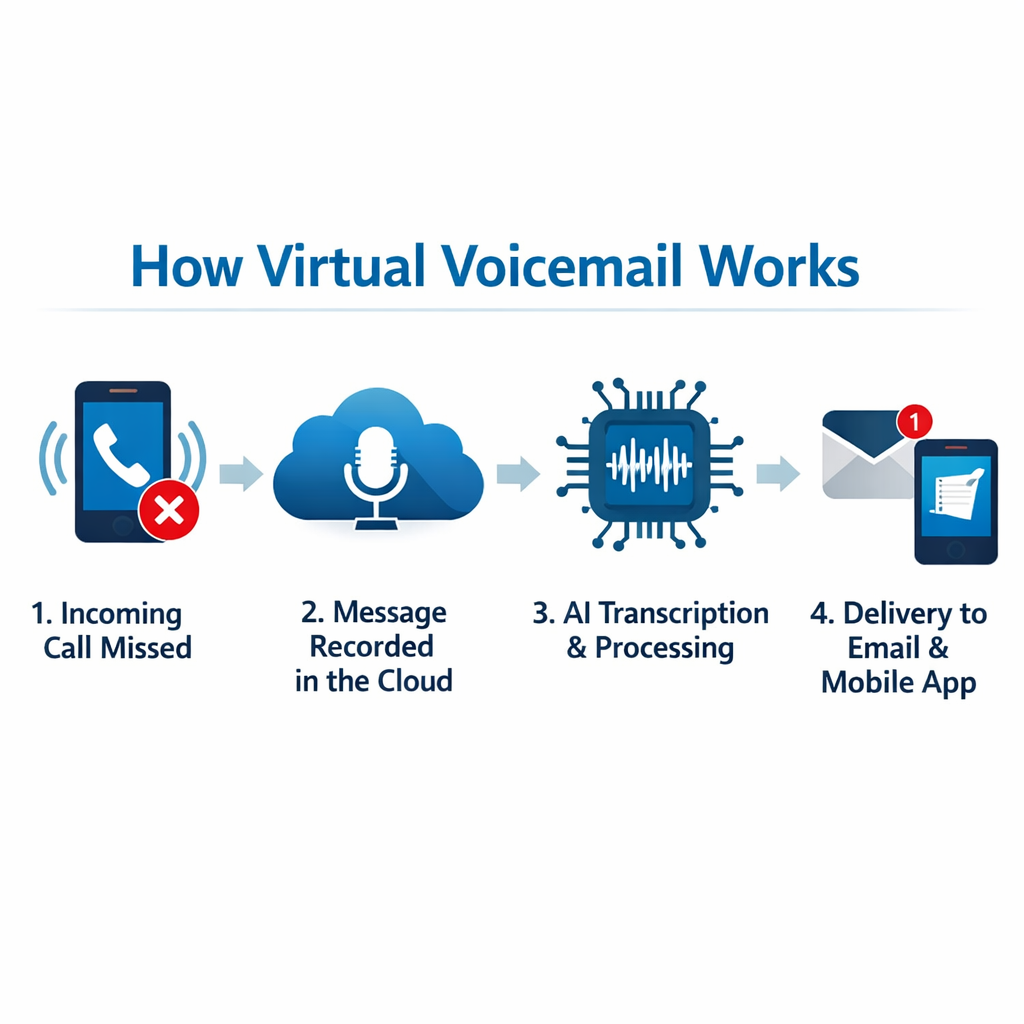
The operational mechanics of virtual voicemail are rooted in VoIP technology, which converts analog voice signals into digital data packets. This process typically involves several key stages:
- Call Redirection: When an incoming call is not answered, it is automatically redirected to the virtual voicemail system. This redirection can be configured based on various rules, such as after a certain number of rings, when the line is busy, or during specific hours.
- Digital Recording: The caller's message is recorded digitally and stored securely in the cloud. This digital format is crucial for subsequent processing and accessibility.
- Processing and Transcription (Optional): The recorded audio file can then undergo further processing. If voicemail-to-text transcription is enabled, speech recognition algorithms convert the audio into a written transcript. This process often involves advanced AI and machine learning models to ensure accuracy.
- Notification and Delivery: Once processed, the message is delivered to the user through their preferred channels. Common delivery methods include:
- Email: The audio file (e.g., MP3, WAV) and/or text transcription are sent as an attachment or embedded text in an email.
- Mobile App: Dedicated mobile applications provide a centralized interface for listening to, reading, and managing voicemails.
- Web Portal: A secure online portal allows users to access their voicemail inbox from any web browser.
- SMS: Short text summaries or notifications can be sent via SMS.
- Management and Archiving: Users can then manage their voicemails – listen, read, reply, forward, delete, or archive them for future reference. Cloud storage ensures that messages are securely backed up and easily retrievable.
Advanced Features and Future Trends
The landscape of virtual voicemail is continuously evolving, with new features and AI integrations pushing the boundaries of what's possible.
1. Visual Voicemail
Visual voicemail takes transcription a step further by presenting messages in a list format, similar to an email inbox. Users can see who called, when, and a snippet of the transcribed message, allowing them to prioritize and respond without listening to each message individually. This feature significantly enhances efficiency and user experience.
2. AI-Powered Voicemail Assistants
Artificial intelligence is increasingly being integrated into virtual voicemail systems, leading to features such as:
- Smart Routing: AI can analyze the content of a voicemail and automatically route it to the most appropriate department or individual.
- Sentiment Analysis: AI can detect the sentiment of a caller (e.g., urgent, frustrated, happy), helping businesses prioritize responses.
- Automated Responses: For common queries, AI can generate automated responses or even initiate follow-up actions.
- Spam Filtering: Advanced AI algorithms can identify and filter out spam or unwanted calls, saving users time.
- Personalized Greetings: AI can dynamically generate personalized greetings based on caller ID or CRM data.
3. Integration with CRM and Business Tools
Seamless integration with Customer Relationship Management (CRM) systems, project management tools, and other business applications is a hallmark of advanced virtual voicemail solutions. This integration allows for:
- Automated Logging: Voicemails and their transcriptions can be automatically logged against customer records in a CRM.
- Workflow Automation: Triggers can be set up to initiate specific actions based on voicemail content, such as creating a support ticket or scheduling a follow-up call.
- Unified Communication: Voicemail becomes another integrated channel within a broader unified communication platform, alongside email, chat, and video conferencing.
4. Enhanced Security and Compliance
Modern virtual voicemail systems prioritize security and compliance, offering features like:
- Encryption: End-to-end encryption for voice messages and data in transit and at rest.
- Access Controls: Granular user permissions to ensure only authorized personnel can access sensitive voicemails.
- Audit Trails: Detailed logs of message access and management for compliance and accountability.
- Data Retention Policies: Customizable policies to meet regulatory requirements for data storage and deletion.
Implementing Virtual Voicemail: Key Considerations
When considering a virtual voicemail solution, businesses should evaluate several factors to ensure it aligns with their specific needs:
- Reliability and Uptime: Choose a provider with a proven track record of high availability and robust infrastructure.
- Feature Set: Assess the available features, such as transcription accuracy, integration capabilities, and advanced AI functions, to ensure they meet current and future requirements.
- Scalability: Ensure the system can easily scale with your business growth.
- Security and Compliance: Verify that the provider adheres to relevant industry standards and regulations (e.g., GDPR, HIPAA).
- Cost: Compare pricing models, including subscription fees, per-minute charges, and any additional costs for advanced features.
- Customer Support: Opt for a provider with responsive and knowledgeable customer support.
- Ease of Use: The system should be intuitive and user-friendly for both administrators and end-users.
Case Studies and Return on Investment (ROI)
Numerous businesses have reported significant ROI and operational improvements after implementing virtual voicemail. For instance, a study by a leading VoIP provider found that businesses using voicemail-to-text transcription saved an average of 8 hours per employee per month in message management time. This translates to substantial cost savings and increased productivity.
- Small Businesses: Often leverage virtual voicemail to project a professional image without the overhead of a traditional receptionist, ensuring no lead is missed.
- Sales Teams: Utilize transcription to quickly follow up on hot leads, integrating messages directly into their CRM for streamlined sales processes.
- Customer Support: Employ shared mailboxes and automated routing to improve response times and customer satisfaction.
- Healthcare Providers: Benefit from secure, compliant messaging solutions that allow staff to manage patient inquiries efficiently while maintaining privacy.
Conclusion: Virtual Voicemail as a Cornerstone of Modern Communication
Virtual voicemail has evolved from a simple answering service into a sophisticated communication powerhouse, essential for any business striving for efficiency, flexibility, and enhanced customer engagement. By embracing cloud-based technology and integrating advanced features like AI-powered transcription and CRM synchronization, virtual voicemail empowers organizations to manage their voice communications with unprecedented ease and intelligence.
As businesses continue to navigate the complexities of a hybrid work environment and global connectivity, the demand for agile and robust communication solutions will only grow. Virtual voicemail, with its continuous innovation and adaptability, stands as a cornerstone of this evolution, ensuring that every message contributes to a more connected, productive, and successful future. Investing in a world-class virtual voicemail system is not just an upgrade; it's a strategic imperative for staying competitive in the digital age.